An educational feature on GLP-1 care. Sponsored by Tryozi. Not medical advice.
In 2023, the New England Journal of Medicine published a trial called SELECT. It followed 17,604 adults who had heart disease and carried extra weight, but did not have diabetes, for an average of more than three years. Half received semaglutide. Half received a placebo.
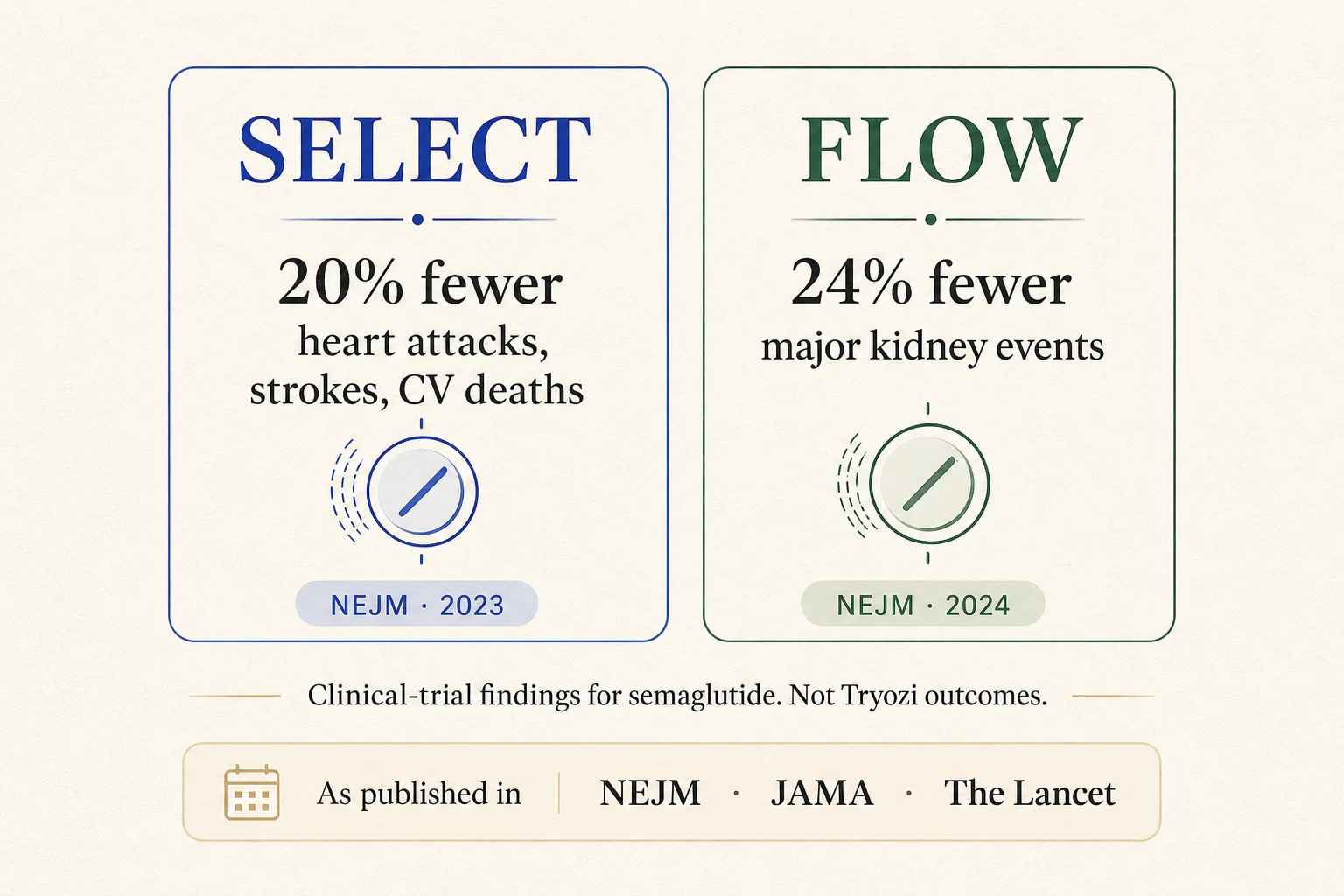
The group on semaglutide had 20% fewer major cardiovascular events, meaning heart attacks, strokes, and cardiovascular deaths (SELECT, NEJM 2023). It was the first time a weight medicine had been shown to lower the risk of such events.
For a careful person, weight loss is not the headline. The real question is whether a medicine is safe to live with for years, especially next to other prescriptions and existing conditions. On that question, semaglutide has been studied more than almost anything in its class.
Science Has Had an Eye On This For Decades
New is not the same as proven, and anyone who has been burned by a fad knows the difference.
Semaglutide's cardiovascular safety was first put to the test in people with type 2 diabetes back in 2016 (SUSTAIN-6, NEJM 2016). SELECT then tracked people for more than three years. A separate two-year trial found the weight stayed off while treatment continued, with no new safety problems surfacing over that time (STEP 5, Nat Med 2022). And an analysis that pooled trials by age found the benefits and the safety held up consistently, from younger adults all the way into the over-70 group (Diabetes Ther 2025).
The Benefits Reach Past the Scale
For someone focused on health rather than appearance, the wider findings are the ones worth reading.
- Heart: 20% fewer major cardiovascular events in adults with heart disease and excess weight (SELECT, NEJM 2023).
- Kidney: in people with type 2 diabetes and chronic kidney disease, a dedicated trial was stopped early because semaglutide cut major kidney events by 24% and lowered death from any cause by 20% (FLOW, NEJM 2024).
- Heart failure: in patients with obesity-related heart failure, it eased symptoms and let people walk noticeably farther (STEP-HFpEF, NEJM 2023).
- Liver: in a fatty-liver disease called MASH, it resolved the active disease in 62.9% of patients versus 34.3% on placebo (ESSENCE, NEJM 2025).
- Everyday markers: across trials, blood sugar (A1c), blood pressure, and cholesterol tended to improve alongside the weight.
One honest caveat belongs right here. These trials used branded semaglutide at specific doses, in specific patient groups. They are the science behind the molecule, not a promise about any one person's result. (Individual results vary.)
Will It Interfere With Other Medicines?
For anyone already taking prescriptions, this is the practical worry, and it has been studied directly.
A pharmacology study tested semaglutide alongside four of the most common medicines, metformin, warfarin, atorvastatin, and digoxin, and found no clinically meaningful effect on how the body absorbs them (Hausner, Clin Pharmacokinet 2017). That is reassuring, but it is not a blanket clearance for every drug. It is exactly the kind of question a licensed clinician should check against a full medication list before anyone begins.
The Honest Cautions
No medicine worth taking comes without trade-offs, and a trustworthy account includes them.
- Side effects are mostly digestive. Pooled trial data put nausea and vomiting several times more common than placebo, usually mild to moderate and easing as the body adjusts (Kommu meta-analysis, Obes Rev 2024).
- Stopping matters. When treatment ends, much of the lost weight tends to return (STEP 1 Extension, 2022). This is ongoing care, not a quick fix.
- On the mood-related headlines: a review of studies found no significant link between these medicines and suicidal thoughts, and a real-world study of more than 240,000 people found a lower rate, though sensible monitoring still applies (DMRR 2025; Wang and Volkow, Nat Med 2024).
Seeing whether it fits takes about two minutes, and a licensed clinician reviews every answer.
Why a Real Clinician Looks First
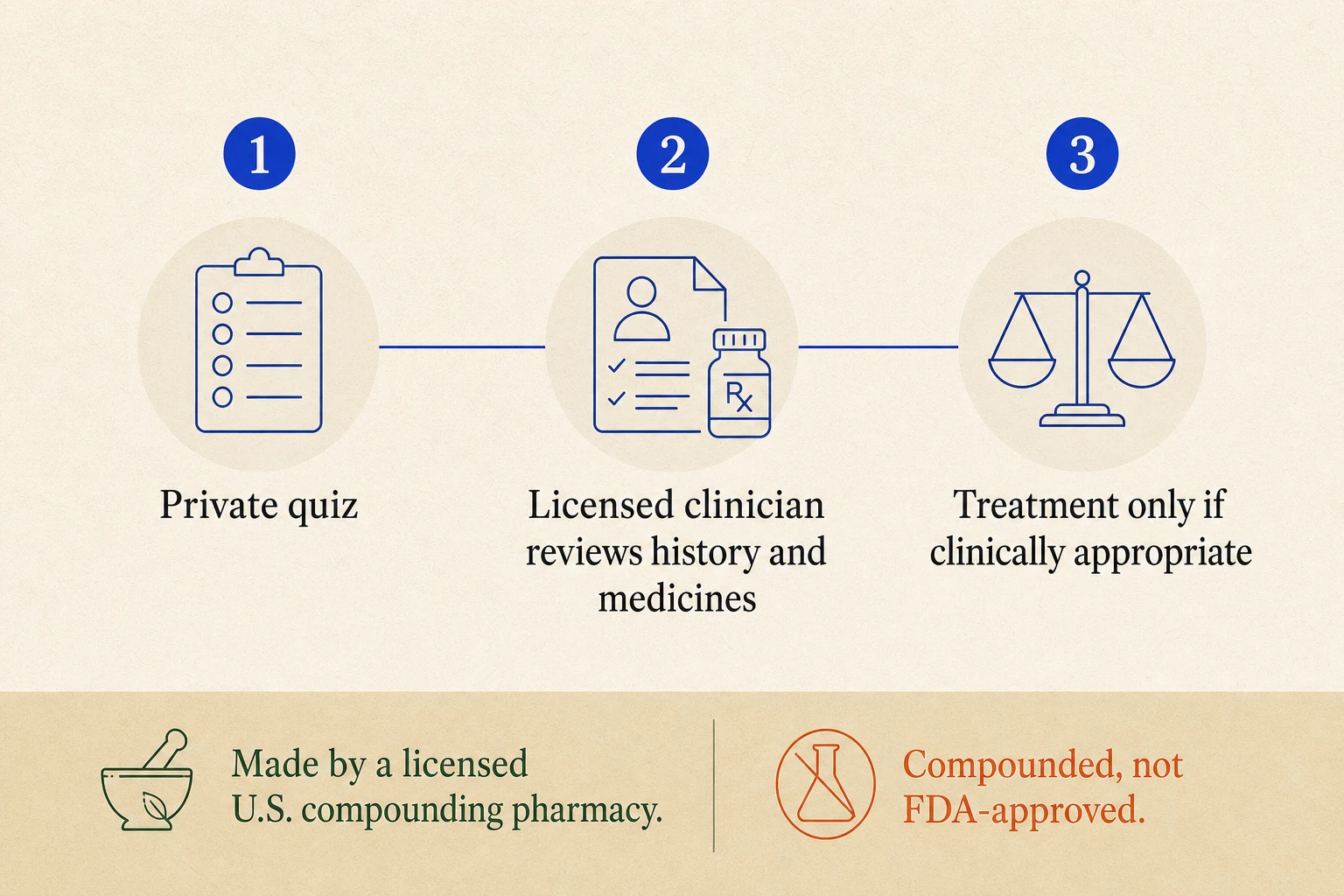
All of this is the reason Tryozi does not hand out a prescription for filling in a form. A licensed clinician, through Tryozi's medical partner, reviews a person's health history, existing conditions, and current medicines, and prescribes only when it is appropriate. When it is not, they say so.
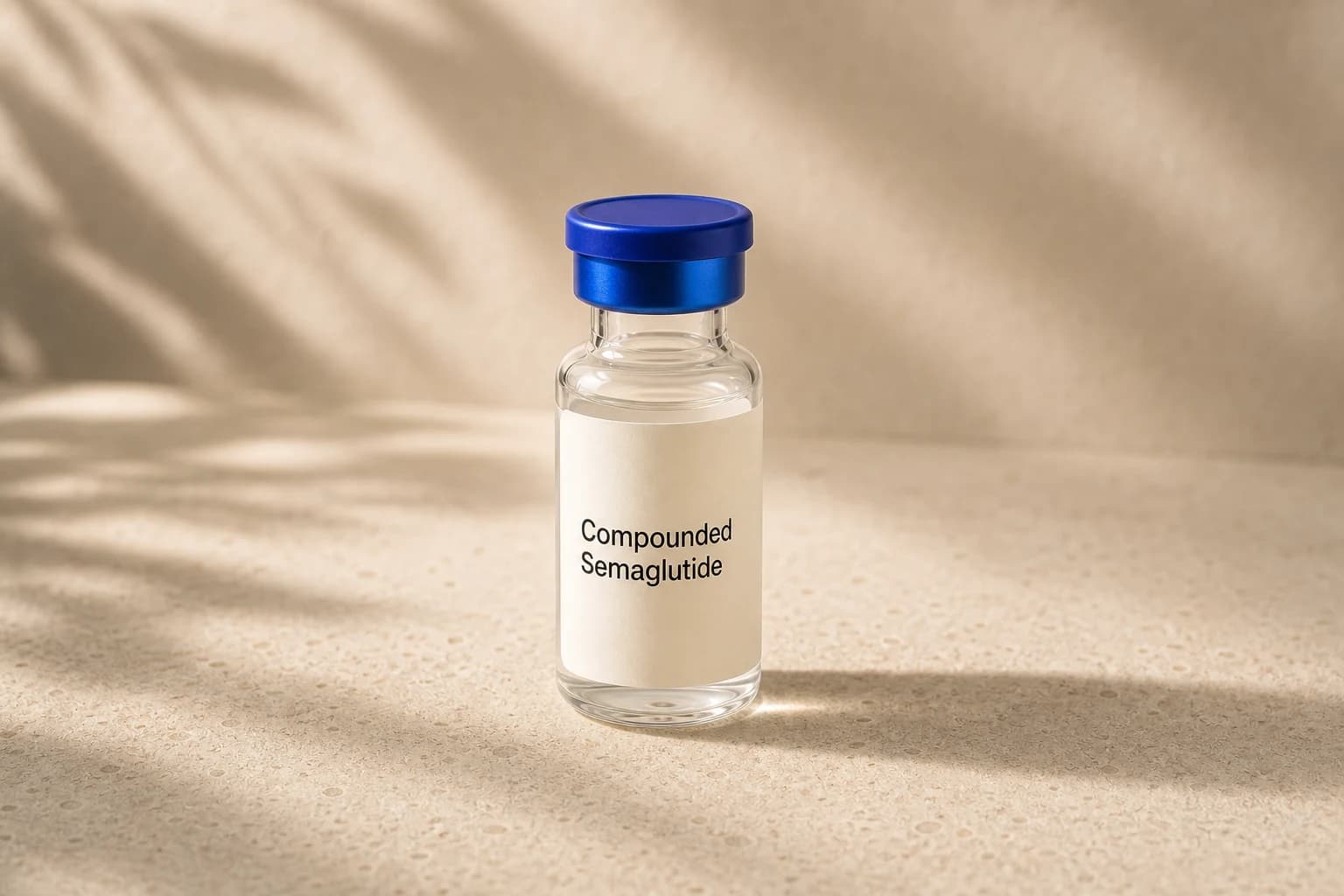
The medicine is named plainly: compounded semaglutide, made by a licensed U.S. compounding pharmacy. Compounded medicine is not FDA-approved, and Tryozi states that transparently, not in a footnote.
Where to Start
There is nothing to decide today. The only step is finding out whether this is a fit for you.
It starts with a private, two-minute quiz. A licensed clinician reviews the answers and, when it makes sense, walks you through the next steps. When it is not the right fit, the answer is a straight no.