An educational feature on GLP-1 care. Sponsored by Tryozi. Not medical advice.
The medicine worked. The weight came down. Life felt easier for the first time in years. And then something changed. The price jumped way out of budget. Coverage ran out. Or the online provider that prescribed it stopped answering. The prescription ended, and in just a few months, the weight came back.
That is not personal failure. It's science, and there is research to back it up.
What the Research Shows About Stopping
The regain is not a character flaw. It is how the body is conditioned to react when GLP-1 treatment stops.
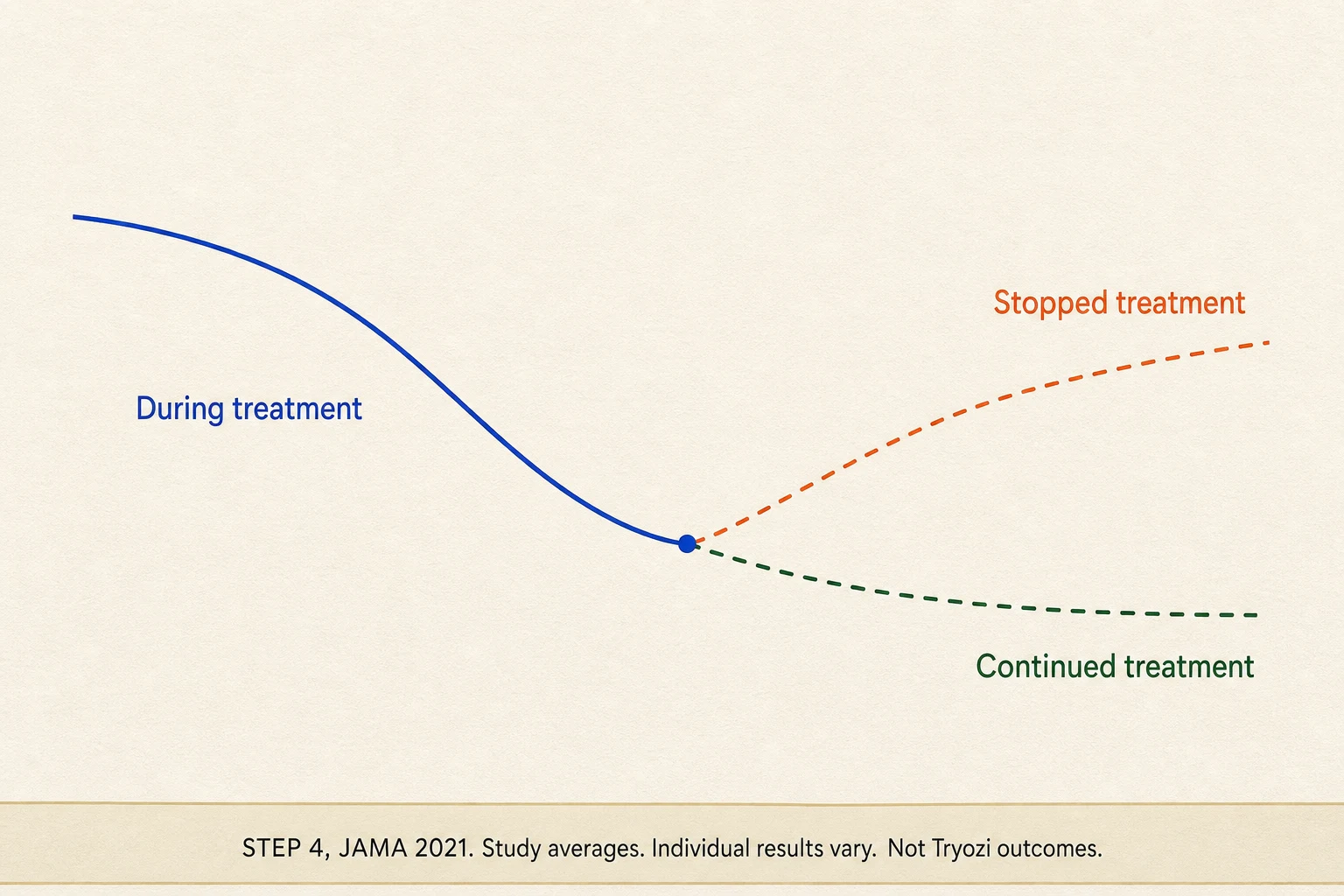
In one trial, people spent 20 weeks on semaglutide and lost about 10% of their weight. Then half continued the medicine and half switched to a placebo. The group that continued lost roughly another 8%. The group that stopped regained about 7% (STEP 4, JAMA 2021). Same people, same effort. The only thing that changed was access to the medicine.
A separate follow-up found that a year after stopping GLP-1 treatment, participants had regained about two-thirds of the weight they had lost (STEP 1 Extension, 2022). And a review across many trials found the same pattern holds regardless of how long someone was treated: stop, and the weight tends to return (J Clin Med 2025).
None of that is a verdict on willpower. It is the clearest possible sign that this is ongoing care, and that staying on it is the whole game.
The starting point is a free two-minute quiz. A licensed clinician reviews every answer.
So What Actually Knocked People Off?
Look closely at the stories, and it is rarely the medicine that fails. It is the plan around it.
The $39 intro price that quietly became something no budget could hold. The coverage that vanished at renewal. The subscription that was easy to start and a nightmare to reach a human about. The provider that felt more like a checkout than a clinic. People did not quit because they stopped caring. They quit because the ground moved under them.
What Would Have to Be Different This Time
Tryozi is built around the exact points where people got knocked off before.
The price is flat and stated up front. The first month is $139, and each refill after that is $279. No surprise jump to a number that ends the plan, and no automatic renewal at launch. Every term appears before any payment, so there is no cliff to fall off later.
Support does not disappear. The first weeks are the hardest, and that is when a real person stays reachable, checking in and keeping a clinician involved, rather than a form and an inbox that never answers.
A licensed clinician stays in the picture. Through Tryozi's medical partner, a clinician reviews the person's history and prescribes only when it is appropriate, and remains the point of contact, not a one-time signature.
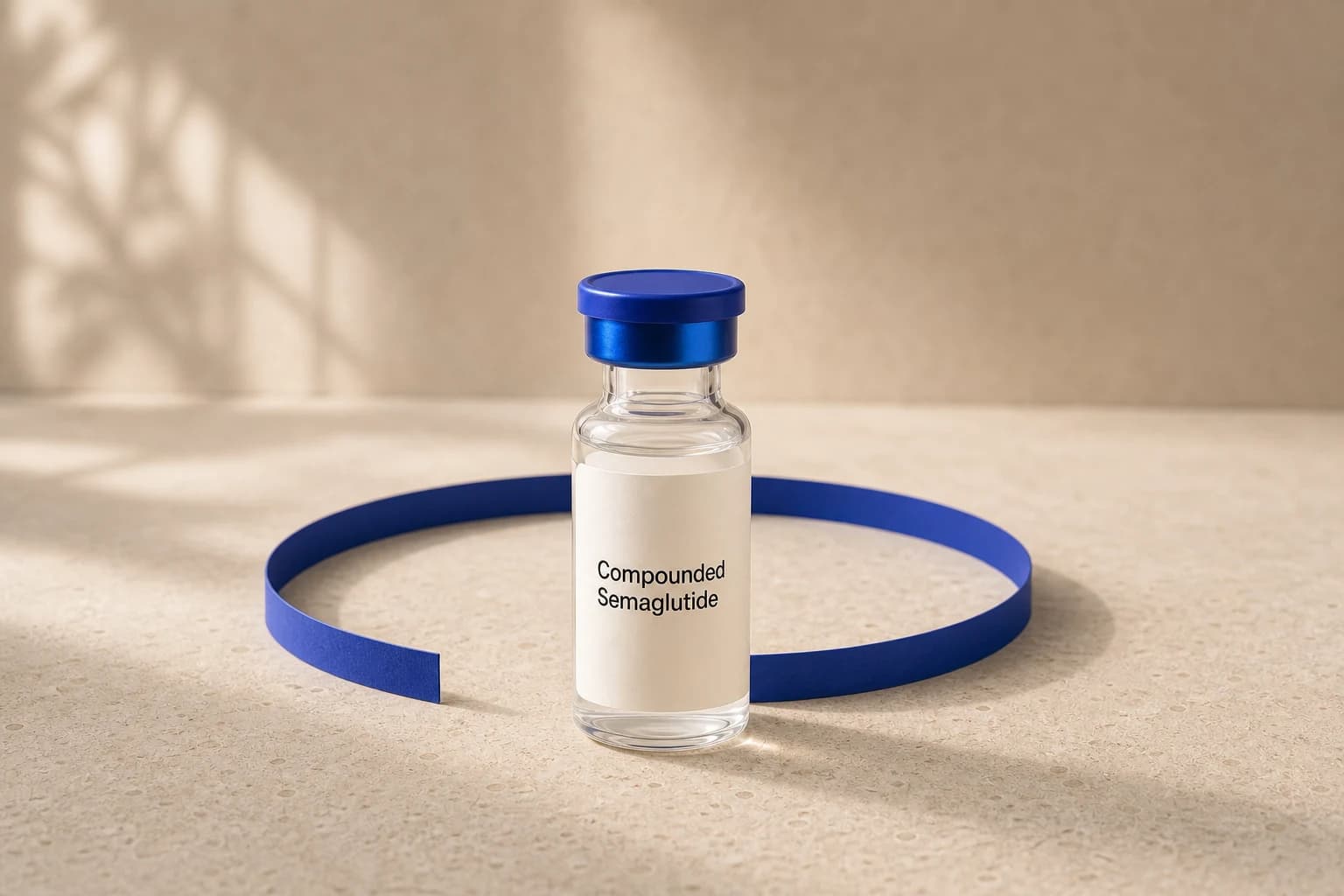
The medicine is named plainly. A licensed U.S. compounding pharmacy makes it, and it is compounded semaglutide. Compounded medicine is not FDA-approved, and Tryozi states that transparently, not in a footnote.
Seeing whether it fits takes about two minutes, and a licensed clinician reviews every answer.
Where to Start
There is nothing to decide today. The only step is finding out whether a restart makes sense.
It starts with a private, two-minute quiz. A licensed clinician reviews the answers and, when it makes sense, walks through the honest next steps: the side effects, the flat price, and what staying on a plan actually looks like. When it is not the right fit, the answer is a straight no.