Not medical advice
For decades, losing weight meant one instruction repeated louder: eat less, try harder. GLP-1 medication takes a different route, and for once the science behind it is real, published in the world's top medical journals. Here are seven reasons it works when dieting does not.
1. It targets the real cause of overeating, not willpower
Diets ask people to out-muscle their own appetite. GLP-1 medicines work differently. After a meal, the gut releases a hormone that signals fullness to the brain. In a lot of people that signal is weak, so the appetite never quiets and the thoughts about food run all day, a hum researchers call food noise. Semaglutide carries a longer-lasting version of that signal and turns it back up, so hunger eases on its own. That is why it works when willpower alone does not.
2. The weight loss is substantial, and proven in large trials
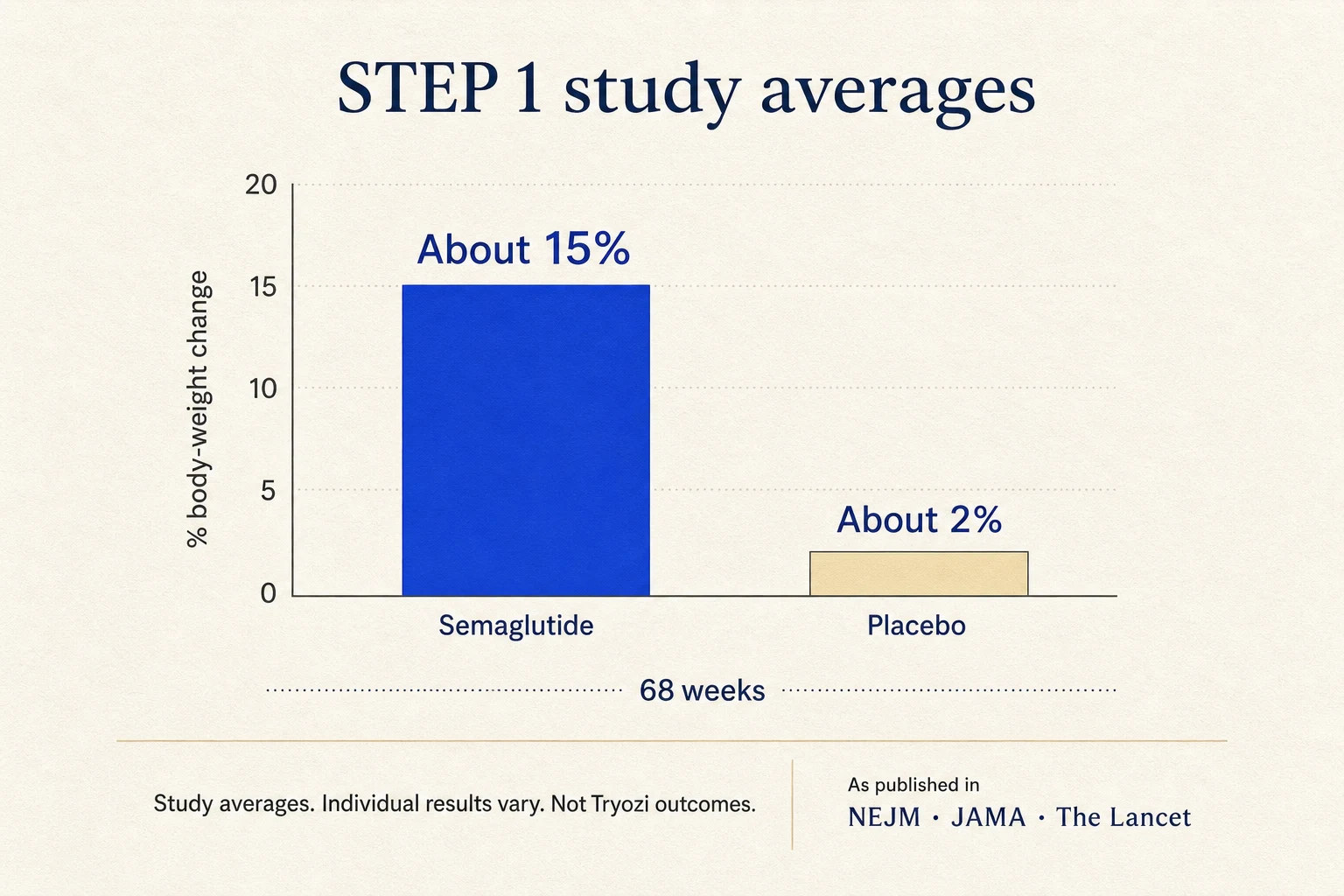
This is not one viral story. In a 68-week trial, participants lost on average about 15% of their body weight, next to about 2% on placebo, alongside diet and activity support (STEP 1, NEJM 2021). Two-year data showed the loss held while treatment continued (STEP 5, Nat Med 2022). (Study averages. Individual results vary, and these are not Tryozi outcomes.)
3. It amplifies diet and exercise instead of replacing them
GLP-1 care is not a shortcut that works in a vacuum. In a trial that paired the medicine with structured lifestyle support, people lost about 16% of their weight, well beyond what lifestyle support achieved on its own (STEP 3, JAMA 2021). The medicine makes the effort a person is already putting in go further, rather than asking them to do nothing.
The starting point is a free two-minute quiz. A licensed clinician reviews every answer.
4. Most of the loss is fat, and muscle can be protected
A fair worry about any fast weight loss is losing muscle along with fat. In one controlled trial, the weight lost was mostly fat, and the proportion of lean tissue actually improved (BARI-STEP, Nat Med 2026). Done right, with enough protein and some strength work under clinician guidance, the goal is fat loss, not just a smaller number on the scale.
5. The mental relief is often the biggest change
Ask people what changed, and the first answer is rarely the scale. It is the quiet. The constant negotiating with food eases, and trials that measured quality of life found real gains in self-esteem and everyday physical function alongside the weight loss (STEP program; BARI-STEP, Nat Med 2026). For many people, that mental quiet is worth more than any single number.
6. The benefits reach past the scale
GLP-1 treatment tends to improve blood sugar, blood pressure, and cholesterol along with weight. In large trials, semaglutide lowered major cardiovascular events by 20% (SELECT, NEJM 2023) and cut major kidney events by 24% (FLOW, NEJM 2024). One honest caveat: those trials used branded semaglutide at specific doses in specific patient groups, so they are the science behind the molecule, not a promise for any one person or a claim about compounded products.
7. It is a lasting approach, not a crash diet
Crash diets fail because the body fights back the moment they end. GLP-1 care is built as ongoing treatment: the weight tends to stay off while a person stays on it (STEP 5), and tends to return if it stops (STEP 1 Extension, 2022). That makes it a long-term plan a person can actually keep, rather than another quick fix that unravels in a few months.
How to get it, honestly
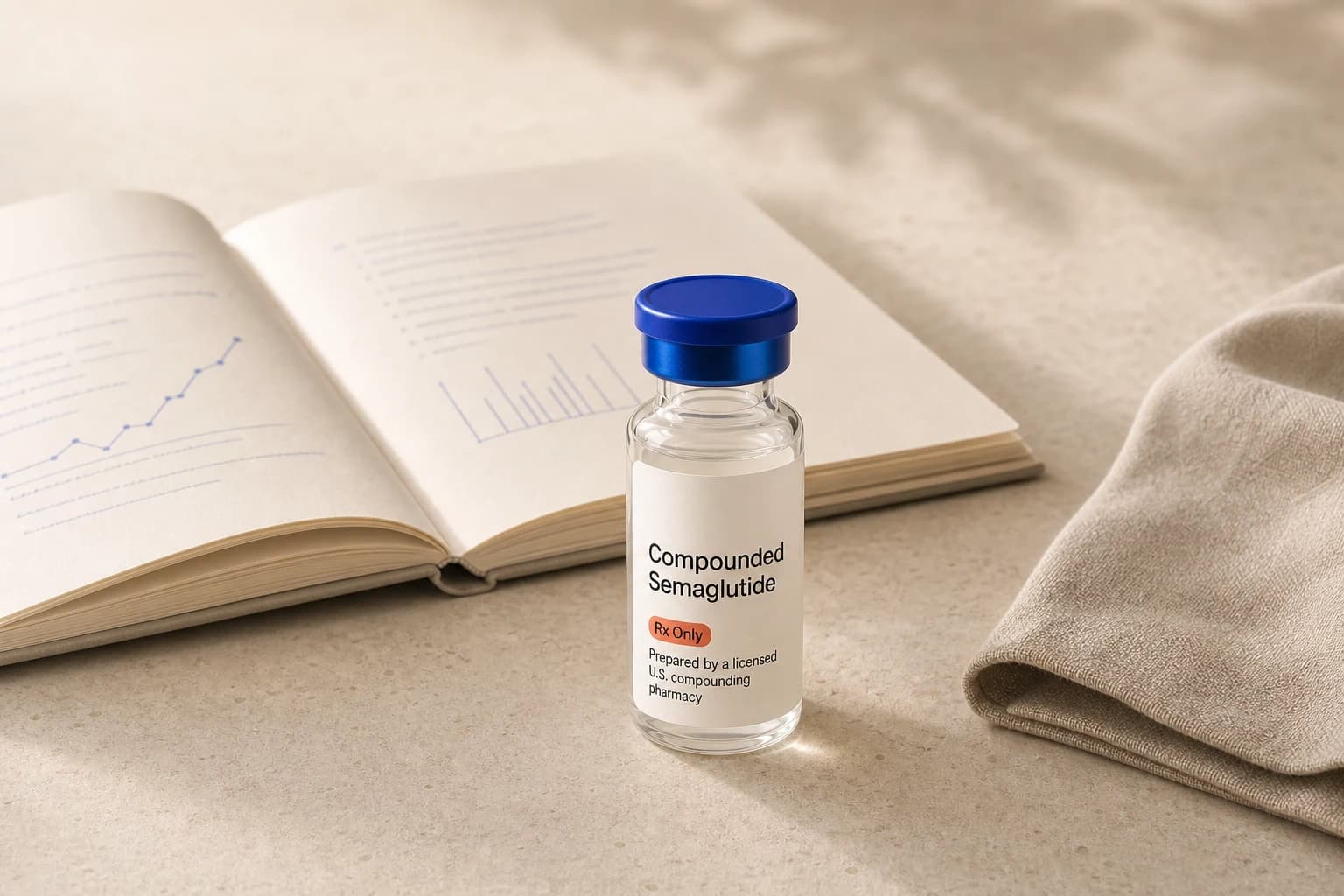
The treatment is only as good as the program behind it. Tryozi offers a clinician-guided path to GLP-1 care: a licensed clinician, through its medical partner OpenLoop, reviews a person's health history and current medicines and prescribes only when it is appropriate. The medicine is a once-weekly injection of compounded semaglutide, made by a licensed U.S. compounding pharmacy. Compounded medicine is not FDA-approved, and Tryozi states that plainly rather than in a footnote.
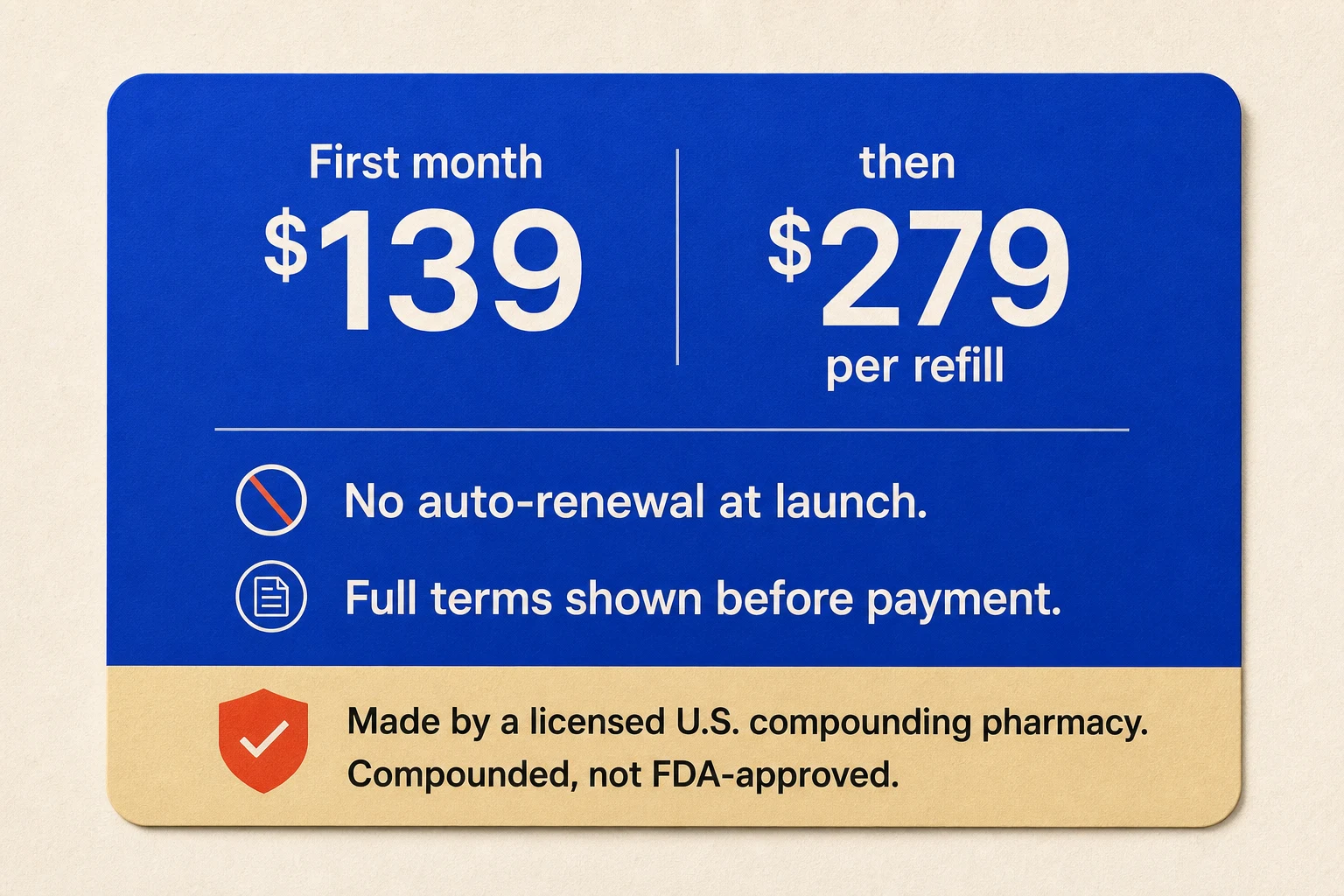
The pricing is flat and shown up front: $139 for the first month, then $279 per refill, with no surprise jump and no automatic renewal at launch.
Common questions
Is this the same as Ozempic or Wegovy? No. The medicine is compounded semaglutide, prepared by a licensed U.S. compounding pharmacy. Compounded medicine is not FDA-approved, and it is not the branded products.
Is it safe? It is a real medicine with real considerations. A licensed clinician reviews each person's health history and current medicines first, and prescribes only when it is appropriate. Side effects are usually mild and digestive, such as nausea, and there is an FDA boxed warning that the clinician screens for.
Do I need a prescription? Yes. A prescription is issued only if a licensed clinician determines treatment is appropriate after the quiz and review.
What does it cost? The first month is $139, and each refill after is $279. No surprise jump, and no automatic renewal at launch.
What happens if I stop? Research shows the weight tends to return after treatment ends (STEP 1 Extension, 2022), which is why it works best as ongoing care with a plan a person can actually keep.
Ready to see if it fits?
There is nothing to decide today. The only step is a private, two-minute quiz. A licensed clinician reviews the answers and, when it makes sense, walks through the honest next steps: the side effects, the flat price, and what the plan actually looks like. When it is not the right fit, the answer is a straight no.